Of all the demonic kings documented in serious Western occult tradition, King Paimon stands apart in a specific way. His reputation for genuine responsiveness, the breadth of what he governs, and the quality of what he offers to practitioners who approach him correctly have made him one of the most sought-after entities in serious demonic work.
He’s also one of the most misrepresented — particularly since his appearance in popular culture brought a surge of interest from people with no serious occult background and no understanding of what working with a demonic king of his standing actually requires.
This guide covers who Paimon demon actually is according to the grimoire tradition, his position in the infernal hierarchy, his documented abilities, the King Paimon sigil and its role in invocation, and what serious practitioners need to understand before approaching him.
Who Is Paimon — His Origins and Position
In the Classical Grimoire Tradition
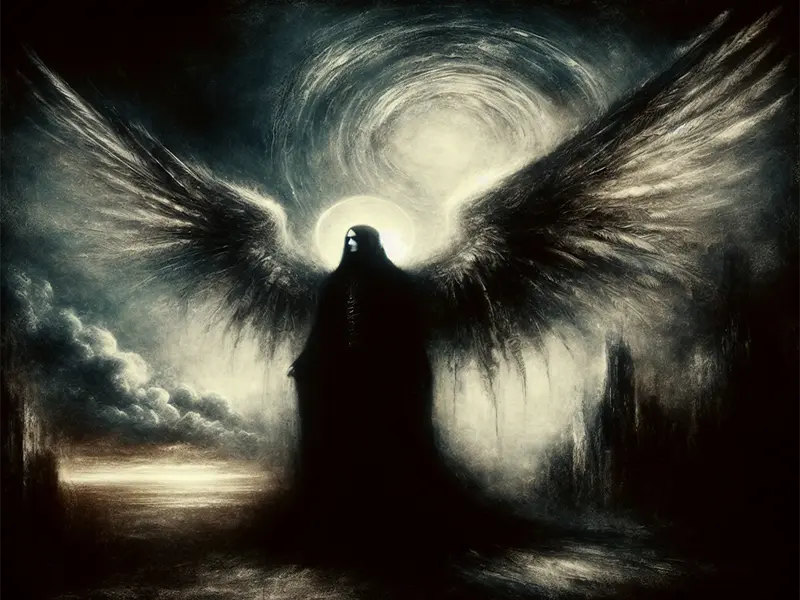
Paimon demon appears in the Ars Goetia as the ninth spirit listed — a Great King of Hell commanding between 85 and 200 legions of demons, some belonging to the order of Powers, others fallen angels. The Pseudomonarchia Daemonum and other serious grimoire sources confirm his position and his attributes consistently, which is notable — entities that appear across multiple independent grimoire sources with consistent descriptions carry a different level of historical credibility than those appearing in only one text.
His position relative to Lucifer is one of King Paimon’s most distinctive characteristics in the grimoire tradition. He takes orders exclusively from Lucifer and operates with a loyalty and directness of service to that authority that sets him apart from many other demonic entities. No other demon in the hierarchy holds authority over him — a point the grimoires are explicit about and that has practical significance for practitioners working with him.
His origin before the fall is described in several sources as belonging to the angelic order of Dominions — high-ranking angels whose function was governance and order. After the fall, those same qualities translated into the disciplined, knowledgeable, and authoritative entity documented in the grimoires. The structural intelligence and capacity for ordered knowledge that characterized his angelic nature remains present in his current form — redirected rather than destroyed.
related blog: Beelzebub The Demon Lord
King Paimon's Appearance and Approach
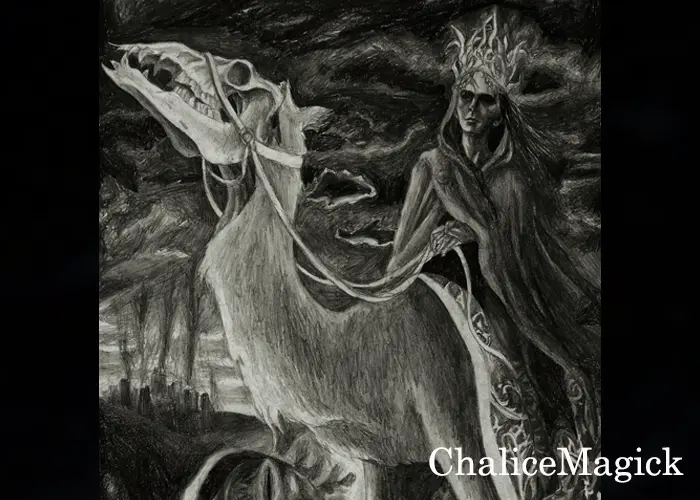
The grimoire descriptions of Paimon’s appearance are among the most distinctive of any entity in the Goetia. He arrives as a man with features that combine masculine authority with subtlety — described as wearing a crown adorned with precious stones, riding a dromedary at extraordinary speed, and preceded by a procession of spirits playing trumpets and cymbals.
His voice on initial appearance is described as a deafening roar — so powerful that summoners must request he moderate it before communication becomes possible. This detail appears consistently across sources and is relevant practically: the initial contact with Paimon is often experienced as overwhelming before the exchange settles into the more measured communication the grimoires describe.
The directional orientation specified for his invocation — facing northwest, toward where he resides — is one of the specific details that serious practitioners verify rather than treat as symbolic.
Perhaps the most important behavioral characteristic documented for King Paimon is his expectation of reciprocity. He asks questions of the summoner before providing what’s requested. This isn’t obstruction — it’s the protocol of a demonic king who expects genuine exchange rather than one-sided demands. Practitioners who understand this and engage accordingly report a very different experience than those who approach him as if issuing commands.
King Paimon's Powers and Domains
The breadth of what Paimon governs is exceptional even among the Great Kings of the Goetia.
● Knowledge and Arts
Paimon’s primary domain is knowledge — and the range is extraordinary. Arts, sciences, philosophy, the workings of the human mind, the mysteries of earth, wind, and water, secrets of nature that fall outside ordinary human understanding. He can reveal what is hidden, explain what is obscure, and provide insight into questions that have resisted other approaches.
This makes him particularly valued by practitioners whose goals involve understanding rather than just material outcomes — and by those whose material goals require information or insight as the foundation for achieving them.
Historically, during the Renaissance period when ritual magic flourished among European scholars and nobility, Paimon was specifically sought for advantages in fields like alchemy, astronomy, and political strategy. These weren’t uneducated people chasing superstition — they were the intellectuals of their era, and their choice of Paimon reflects something meaningful about the quality of what he was understood to offer.
● Familiars and Lasting Legacies
Paimon has the documented ability to grant familiars — spirits that serve the practitioner, provide protection, and in some traditions can be passed down through family lines. This is among his more unusual attributes and one that distinguishes him from entities whose influence ends with a specific working.
A familiar granted through serious Paimon work isn’t a one-time transaction. It’s an ongoing relationship that extends the practitioner’s spiritual resources in a sustained way.
● Authority, Titles, and Influence
Among the practical applications King Paimon is invoked for, assistance with acquiring dignity, status, and authority appears consistently. He can help overcome enemies and opposition through means that operate at the level of influence and perception rather than direct confrontation.
His capacity for mind influence — affecting how others perceive the practitioner and respond to them — is one of the most practically significant aspects of his domain for people working toward goals that depend on the cooperation or favorable reception of others.
● The Demonic Kings He Brings
When Paimon appears in response to invocation, the grimoires note he is sometimes accompanied by two lesser demon kings — Bebal and Abalam. Their presence is noted as a sign of a successful and properly conducted summoning rather than something to be concerned about. This is consistent across the primary grimoire sources and is one of the details experienced practitioners look for as confirmation of genuine contact.
The King Paimon Sigil: Its Role and Use
The King Paimon sigil is one of the most distinctive and recognizable in the entire Goetia — and it functions as a central element of any serious invocation work with this entity.
In classical Goetic practice, a spirit’s sigil serves multiple purposes. It establishes the energetic connection between the practitioner and the entity.
It is used as the focal point during invocation — placed within the ritual space, typically within the triangle where the entity is called to appear. And it serves as a point of ongoing connection in subsequent work.
The King Paimon sigil should be drawn accurately and with deliberate intention rather than reproduced casually. The precision of the sigil matters — it is the identifying mark of this specific entity, and inaccuracies affect the quality of the contact. Practitioners who approach sigil work as a meaningful act of preparation rather than a formality consistently report better results than those who treat it as incidental.
Anointing the sigil with appropriate oil before working — frankincense or a dedicated Paimon-specific preparation — is part of activating it as a working tool rather than simply a drawing. This activation is what distinguishes a sigil being used in serious ritual work from one being displayed as decoration.
The sigil can also be incorporated into ongoing work with Paimon beyond the initial invocation — kept on the altar, used as a focal point for subsequent communication, or incorporated into specific workings where his influence is being called on for particular goals.
What Paimon Expects From Practitioners
This is where many practitioners who’ve read surface-level accounts of Paimon demon work go wrong — and it’s worth addressing directly.
King Paimon is a Great King of Hell commanding hundreds of legions. He is not an errand spirit that responds to casual requests from unprepared practitioners. The grimoires are consistent on this: he expects genuine preparation, proper protocol, sincere offering, and the kind of respectful engagement that acknowledges what he is.
The reciprocity requirement — his practice of asking questions before providing assistance — is the most concrete expression of this expectation. It isn’t obstruction. It’s his way of establishing whether the practitioner is serious, whether the exchange is genuine, and whether the working is worth engaging with. Practitioners who answer his questions honestly and engage with the exchange rather than trying to bypass it consistently describe more productive interactions.
Offerings matter with Paimon in a way that’s more significant than with many other entities. The grimoires specify that when he is summoned alone — without other entities — he requests an offering as a sign of exchange. This isn’t optional ceremony. It’s a functional part of what makes the contact a genuine reciprocal working rather than one-sided demand.
The quality of preparation — ritual space, timing, the proper use of the King Paimon sigil, the offering, the practitioner’s own energetic state — determines much of what happens. A Paimon invocation conducted without adequate preparation produces weak contact at best. Conducted properly, with experience and genuine spiritual authority behind it, it produces something entirely different.
Paimon Demon in Popular Culture vs. Serious Practice
The 2018 film Hereditary brought King Paimon into mainstream awareness — and brought a significant influx of people to occult sources looking for information about him without any background in serious practice.
The film depicts Paimon through the lens of horror — as an entity whose influence is catastrophic, whose possession is violent and destructive, and whose cult is presented as something that destroys the families it touches. This makes for compelling cinema.
It doesn’t reflect serious grimoire tradition or the experience of practitioners who work with Paimon seriously and knowledgeably.
Paimon in the Ars Goetia is described as knowledgeable, intelligent, and — when approached correctly — cooperative. The horror-film framing serves the narrative of that particular story. It isn’t a guide to what Paimon demon actually is or how working with him actually functions in serious practice.
Practitioners who come to Paimon through the film often bring expectations shaped by that framing — which is part of why preparation, education, and ideally experienced guidance matters so much for anyone approaching this entity seriously.
Frequently Asked Questions
Who is Paimon demon in the grimoire tradition?
Paimon is a Great King of Hell, ranked ninth in the Ars Goetia and documented across multiple serious grimoire sources including the Pseudomonarchia Daemonum. He commands between 85 and 200 legions of demons, serves Lucifer with absolute loyalty, and governs a domain that encompasses arts, sciences, knowledge of the natural world, the workings of the human mind, authority and titles, and the granting of familiars.
What is King Paimon known for specifically?
King Paimon is primarily known for the breadth and quality of knowledge he provides — across arts, sciences, philosophy, and hidden information beyond ordinary human access. He is also sought for assistance with authority and status, overcoming opposition, influencing how others perceive the practitioner, and granting familiars that provide ongoing spiritual support.
What is the demon paimon sigil and how is it used?
The King Paimon sigil is his identifying energetic mark, used in ritual work to establish and focus contact with him. It is placed within the ritual space during invocation — typically in the triangle — and can be used as a focal point for ongoing work. It should be drawn accurately and activated with appropriate oil and intention rather than reproduced casually. The precision and deliberateness of its preparation is part of what makes it function as a serious ritual tool.
related blog: The 7 Princes of Hell
What does Paimon demon expect from practitioners?
Paimon expects genuine preparation, proper ritual protocol, sincere offering when working alone with him, and respectful reciprocal engagement rather than one-sided demands. He asks questions of the summoner before providing assistance — a characteristic the grimoires are explicit about — and responds to genuine exchange significantly better than to practitioners who approach him without adequate preparation or understanding of what he is.
Is it safe to work with King Paimon?
Working with any demonic king requires adequate preparation, proper protective framework, and ideally the guidance of a practitioner with real experience in this area. The risks associated with Paimon work are primarily those of inadequate preparation rather than the entity being inherently hostile — he is described across grimoire sources as cooperative when approached correctly.
Professional guidance for initial contact and pact work significantly reduces the risks that come from self-directed attempts without sufficient foundation.

Working With King Paimon Seriously
Paimon demon is among the most knowledgeable and capable entities available to serious practitioners — and among those whose domain most directly addresses the goals that bring people to demonic work in the first place. Knowledge, authority, influence, and the kind of insight that changes outcomes in ways ordinary effort doesn’t reach.
Working with him effectively requires the foundation the grimoires describe — proper preparation, the correct use of the King Paimon sigil, genuine offering, and the reciprocal engagement that characterizes successful contact with this entity.
For practitioners who want to approach King Paimon through properly conducted ritual work — either for initial invocation, for pact work, or for specific goal-oriented working — professional guidance produces significantly better outcomes than self-directed attempts based on incomplete online sources.
I work with clients on Paimon invocation, pact work, goal-specific workings through King Paimon’s domain, and the complete ritual framework that makes this contact genuine rather than performative. Every engagement begins with honest assessment of the client’s situation, goals, and what working with this entity is likely to produce in their specific circumstances.
For all available spiritual services: