Throughout history, demonic entities and fallen angels have captivated human imagination, fear, and beliefs. From Lucifer’s rebellion to the maleficent powers of Beelzebub, Asmodeus, and other demons, these infernal demons became symbols of deadly sins and celestial corruption. In this article, we will see the origins, legends, and hidden meanings behind the 7 Princes of Hell — the most powerful demons and fallen angels who shaped occult lore and religious myth.
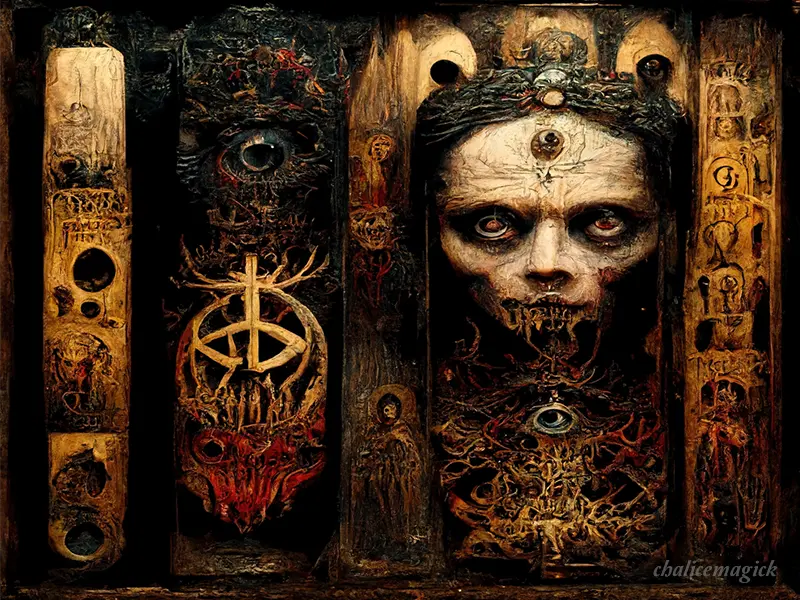
Lucifer the Fallen Angel: The Demon of Pride
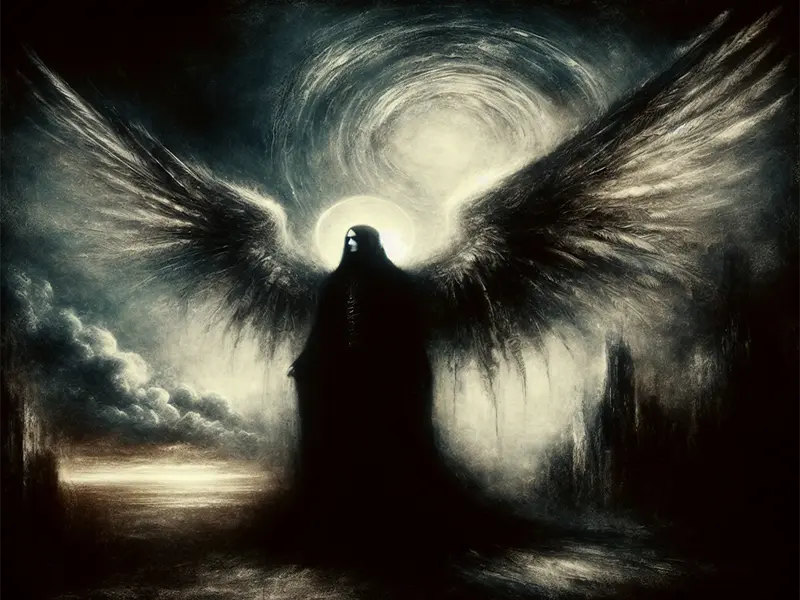
Lucifer was not always the dark prince we know today. Tradition describes him as the most radiant of all heavenly beings — an entity of such brilliance that his own gifts eventually betrayed him. Pride took root in that perfection. Little by little, he convinced himself that his light rivaled God’s, and that single arrogant conviction pushed him to rise against his Creator.
A rebellion in heaven requires soldiers, and Lucifer knew how to gather them. Acting as the Father of Lies, he built a deception so seductive that a third of the angels abandoned their posts to follow him. What followed was a war fought in the heavens themselves — Lucifer’s corrupted legions clashing against the armies of the Archangel Michael, a conflict so violent that, according to the old accounts, the entire universe trembled.
Heaven’s loyal armies proved stronger. The rebels were torn from the skies and hurled into the abyss — into the deepest chambers beneath the earth, where hell itself was waiting. But the war did not end with the fall. To this day, Lucifer and the other princes of hell labor to corrupt everything the Creator has built, and Lucifer remains bound to the cardinal sin that destroyed him: pride. In my practice, this is exactly why pride is treated as the most dangerous of the seven sins — it is the door through which every other darkness enters a person’s life.
And according to tradition, the story is not finished. These fallen princes are said to await the final days before Christ’s return, when they will rise alongside the Antichrist and wage one last war against the forces of the Creator.
Belphegor Demon: The Sin of Laziness
Not every prince of hell earned his throne through rebellion — Belphegor fell through silence. Known also as Belfegor, this demon of laziness was once the powerful archangel Belfagal, and when Lucifer’s war broke out in heaven, he made the fatal mistake of choosing no side at all. He refused to join the rebels, yet never raised a hand to defend the Lord’s armies either. In the eyes of heaven, there is no neutrality in such a war — and so Belphegor was branded a deserter and cast down into hell with the rest.
Saint Thomas Aquinas identified laziness as the root of every sin born from ignorance, and that is precisely the territory Belphegor governs. Under his influence, a person begins to flee every form of effort — and without effort, true knowledge never arrives, so the soul simply stops growing. I often describe this influence to clients as spiritual rust: nothing dramatic happens, nothing breaks loudly, yet slowly the whole life freezes in place. Perhaps that is why the old depictions of this demon are so deliberately humiliating — he is shown seated on a latrine, his royal throne in hell, offering his own filth as gifts. A perfect portrait of a spirit that promises comfort and delivers only decay.
Beelzebub Demon: The Sin of Gluttony
The very name of Beelzebub is a fusion of two ancient powers. It draws from Baal, the old Semitic god of fertility, and Zebub, the god of flies — and out of that blend emerged the demon we know today, sometimes written Belzebuth, the infernal entity of pestilence and decay. Even his origin tells you what he became: wherever fertility rots and death multiplies, Beelzebub is at work.
Among the princes of hell, his rank is undisputed — many sources place him directly below Lucifer himself. His domain is gluttony, and the metaphor is exact: a hunger that is never filled, a devouring that never ends. This is precisely how the plagues of history behaved, and why tradition attached them to this prince of hell — a force that sweeps through everything in its path and leaves nothing behind.
His title, the Lord of the Flies, describes his method of torment perfectly. Souls on their road to hell are said to be haunted by swarming clouds of flies that never disperse — no rest, no silence, no peace, only endless circling irritation until the victim breaks. In my work, this image is the clearest way to explain obsessive, draining spiritual attacks to clients: an influence designed not to destroy you at once, but to deny your mind a single moment of rest.
Mammon Demon: The Sin of Greed
The Mammon demon stands apart from his brothers in one strange way: he never sat among the angels of heaven. He began as a pre-Christian deity of wealth, worshipped for generations before the Church condemned him and recast him as a demon — the eternal face of greed and avarice. Tradition gave him a fitting form: a decayed nobleman, deformed and hunched, his fingers forever locked around his money pouches. And in hell, they say, he raised a vast palace veined with gold, built as a seat of power for Satan himself.
That palace is the center of Mammon’s deception. Greedy men looked upon all that gold and were certain they had found paradise — the only thing actually waiting for them inside was damnation. The Gospels strike directly at this spirit: Jesus warned that the worship of money, personified by Mammon, leaves no room for God — no man can carry both masters at once. And in my experience, this is what makes Mammon’s influence so hard to break: the person under it runs an endless race after money and possessions, always believing satisfaction is one step away, and that race quietly steals the very paradise they are chasing.
Asmodeus Demon: The Sin of Lust
Few princes of hell leave a trail of ruins as visible as Asmodeus. Known in older texts as Asmoday, he rules over lust — the capital sin that turns the most natural human force into a weapon of destruction. His most infamous work: Sodom. It was under Asmodeus’s influence that the city’s people sank into total depravity, and the corruption ran so deep that the wrath of God descended and wiped Sodom from the face of the earth.
Scripture gives us an even more chilling portrait of him in the Book of Tobit. A righteous woman named Sarah tried seven times to marry — and seven times, Asmodeus struck, killing each husband on the very night of the wedding. No human power could stop him; it took the archangel Raphael himself to drive the demon back to hell. That is Asmodeus’s signature: he hides inside desire itself, using carnal urges to wreck lives piece by piece and pull souls away from salvation. When clients describe to me an obsessive attraction that keeps destroying everything around it, this is the type of influence I check for first.
Azazel Demon: The Sin of Wrath
The Azazel demon belongs to the oldest and darkest chapter of the fall. Among the rebels who turned against God, he was legendary for his beauty — radiant at the dawn of creation, ruined after the fall. But Azazel did not simply descend into darkness; he pulled the earth into it with him. He took the women of the world as companions, and from those forbidden unions came the Nephilim, the giants of ancient legend who filled the old world with violence and corruption.
The corruption seeded by Azazel’s descendants grew so monstrous that God sent the flood to wash the earth clean of it. In hell today, Azazel reigns as king of the Shemites — the class of demons that walk in the shape of goats. He embodies the sin of wrath, and his influence carries a signature I recognize well in my practice: where Azazel takes hold, two things follow — explosive, unexplainable rage, and a dangerous pull toward idolatry and dark practices. The angel of beauty became the archdemon of anger, and his story remains a warning: the brightest can fall the hardest.
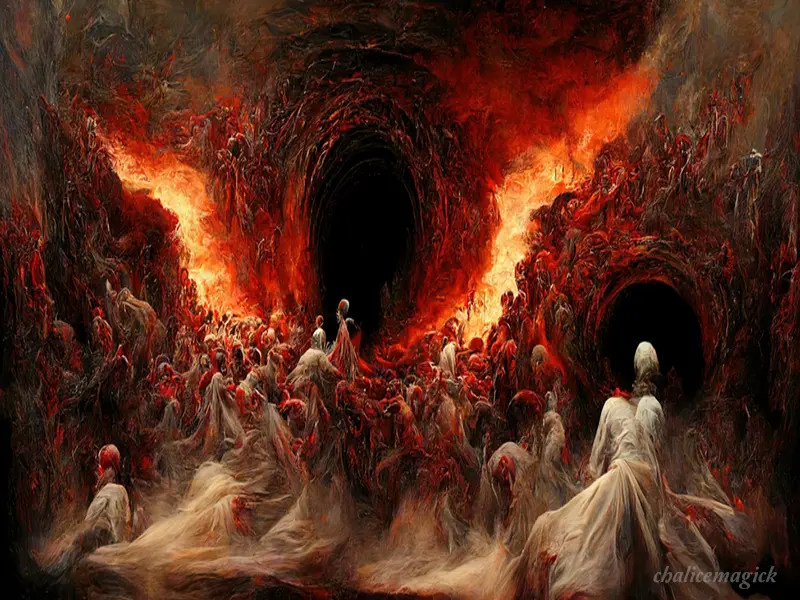
Leviathan Demon: The Sin of Envy
The Leviathan demon is the most alien of all the princes of hell. He is no king seated on a throne, no seducer whispering to souls — he is a force of nature asleep in the black depths of the ocean. The Old Testament warns us that this gigantic creature is hidden there, and the Book of Job records God’s own description of him: a colossal sea dragon whose mere appearance breaks the courage of men. Scripture is blunt about the rest — no one dares wake this beast, and any man who imagines defeating him is dreaming.
What God describes in Job amounts to a catalog of invincibility. The monster drives great waves ahead of him when he moves. His mouth is armed with terrible teeth. His body is sealed in overlapping armor so complete that not even air can slip between the scales — flames pour from his jaws, smoke rolls from his nostrils, and flashes of light burst from his breath. When he rises, even the mightiest warriors run. And human weapons are a joke to him: blades, lances, and arrows shatter harmlessly against a chest harder than rock.
Here lies the paradox of Leviathan: no power on earth compares to him, and yet he is only a creature — one being among all those that walk, fly, and swim, existing solely by the will and permission of God.
Centuries later, the philosopher Thomas Hobbes borrowed this monster’s name for his most famous work. His argument: strip away laws and civilization, and mankind collapses into a war of each man against every other — a chaos only an overwhelming central power, the State, can hold back. The choice of symbol says everything: for the one authority no individual can ever defeat, Hobbes reached for the one beast no man can kill.
In demonological tradition, Leviathan completes the circle of the seven princes of hell as the demon of envy. Envy is the sin that devours a person from within — always hungry for what belongs to others — just as this colossal beast swallows everything in its path. Medieval artists understood this symbolism well: the gates of hell were often painted as the open jaws of Leviathan, the mouth that eternally devours the souls of the damned.
The Hidden Secret
These ancient demons are more than myth. They reflect humanity’s deepest temptations — pride, greed, lust, wrath, and the eternal struggle between light and darkness.
Now that you know about these demons and their power. what if I told you there’s a hidden secret?
A secret known only by a few: the way to seal a pact with these demons and bend them to your will.
Yes, you read that right. As a black magic specialist, I discovered this secret long ago.
And now, using my craft, I can create a demon‑binding pact for you for you — putting one of these great demons under your control.
Demon Pacts Rituals
Supplementary Offers
If you feel affected by dark forces, black magic spells, or unseen energies, explore our hex and black magic removal service designed to restore balance, protect your soul, and break the power of black magic spells.
Frequently Asked Questions
Who are the 7 princes of hell?
They are powerful demonic figures associated with major human sins such as pride, greed, lust, and wrath, often referenced in religious and occult traditions.
Are these demons real or symbolic?
They are interpreted as real spiritual entities. with influence over human behaviour and temptation.
What are the signs of demonic influence?
Common signs include recurring negative patterns, intrusive thoughts, emotional instability, or disturbing dreams. If you want a deeper breakdown, read demonic attacks signs.
Can these demonic influences be removed?
Yes, through proper cleansing, protection, and targeted rituals, these influences can be broken. You can learn more in this guide about How to Get Rid of Demons.
Is it safe to work with such entities?
Only when done with proper knowledge, discipline, and protection. Uncontrolled practices can lead to serious results.