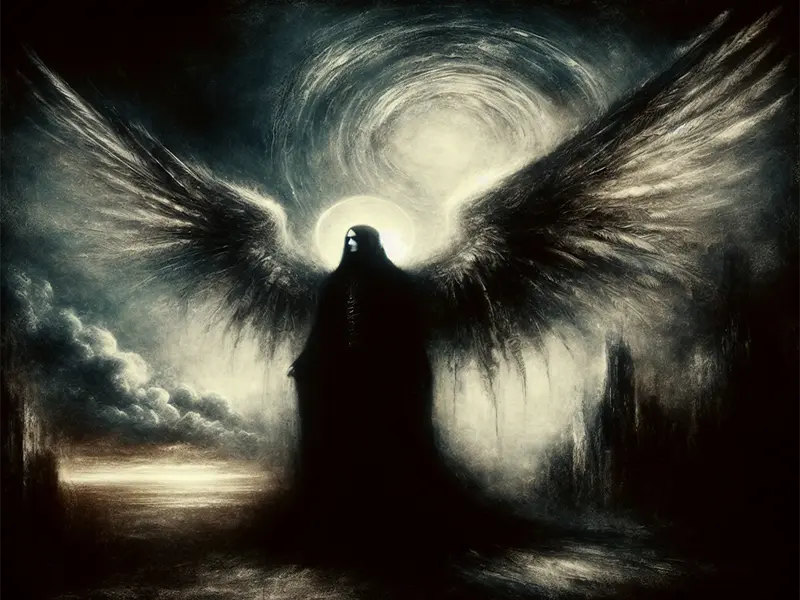
Ask most people who is Belphegor and you’ll get a shrug, or maybe a mention of a mobile game character. Ask someone who’s actually studied demonology, and you’ll get a much older, stranger story — one tied to biblical seduction, forbidden worship, and one of the seven deadly sins.
This is one of the most common patterns I notice: names like Lucifer or Beelzebub get all the attention, while figures like Belphegor demon, despite being genuinely significant in classical demonology, stay largely unknown outside serious study.
Who Is Belphegor
In the classical demonological texts, the belphegor demon is described as a shapeshifter and a deceiver — capable of appearing as a beautiful woman to seduce and mislead, while his true form is described as monstrous and terrifying. He’s frequently listed as a lieutenant sent out on Satan’s behalf, dispatched specifically to corrupt through temptation.
For the other top lieutenant of the infernal order, my guide on Beelzebub the demon lord covers his history and rank.
Belphegor Demon in Classical Demonology
Sixteenth-century bishop Peter Binsfeld, in his classification of demons tied to the seven deadly sins, names demon Belphegor as one of the seven princes of hell — specifically, the demon associated with sloth.
That association is worth unpacking, because sloth in this context isn’t just laziness. It’s framed as a spiritual abandonment — taking the easy path, avoiding effort or hardship, and by extension, avoiding the will of God. Unlike Mammon, the demon tied to greed, Belphegor isn’t described as offering genuine wealth or reward. He’s said to make empty promises instead — luring people into procrastination, daydreaming, and wasted potential rather than actual gain. Some occult writing even suggests he can be invoked to drain creative energy from someone right as they’re on the edge of a good idea, pulling them into a rut instead.
I mention that detail deliberately when clients ask about him — of all the princes, Belphegor is the one whose influence people rarely recognize while it’s happening, because it feels like rest, not attack.
Belphegor and Baal-Peor (Biblical Roots)
Belphegor doesn’t appear under that name in the Bible, but many scholars connect him directly to Baal-Peor, a Moabite deity referenced in the Book of Numbers. The story there is significant: as the Israelites camped near Moab, they were drawn into worship of Baal-Peor through relationships with Moabite women, an episode that provoked serious consequences within the biblical narrative.
The name itself is thought to combine “Baal,” meaning lord or master, with “Peor,” the name of the specific location tied to the incident. Over time, this local deity’s name became associated with the demon we now know as Belphegor — a shift that reflects a common pattern in demonology, where the gods of rival or conquered peoples were reinterpreted as demons in later tradition.
That pattern — rival gods flattened into “demons” — is worth remembering whenever a name carries centuries of history; the story usually says as much about the people telling it as about the figure itself.
Belphegor in Modern Culture
Outside classical demonology, most people today actually encounter Belphegor through pop culture rather than religious text — most notably as a character in the mobile game Belphegor Obey Me!, which has introduced the name to an entirely new, much younger audience with little connection to the original demonological source material.
It’s a good example of how a demonic entity with centuries of dense religious and occult history can end up flattened into something far more casual in modern media — worth knowing if you’re going deeper than the surface-level version most people encounter first.

FAQ
Who is Belphegor in classical demonology?
Belphegor is one of the seven princes of hell in Peter Binsfeld’s classification, specifically associated with the sin of sloth, and is also described in earlier legend as a shapeshifting seducer.
Is the demon Belphegor mentioned directly in the Bible?
Not by that name. He’s widely connected to Baal-Peor, a Moabite deity referenced in the Book of Numbers, whose worship led to serious consequences for the Israelites in that account.
Why is Belphegor associated with sloth specifically?
Unlike demons associated with greed or lust, Belphegor is tied to spiritual and creative stagnation — avoiding effort, procrastinating, and wasting potential rather than actively pursuing evil.
Is the Belphegor from Obey Me the same as the demonological figure?
Not really. The mobile game version is a modern character loosely borrowing the name, with little connection to the centuries-old demonological and biblical tradition behind the original figure.
How does Belphegor compare to other princes of hell?
Each of the seven princes in Binsfeld’s classification is tied to a different deadly sin.
For the full line-up and each sin’s prince, my guide on the 7 princes of hell covers the complete hierarchy.
Conclusion
Belphegor demon lore runs far deeper than most people realize — from a Moabite deity tied to a serious biblical episode, to one of the seven princes of hell in classical demonology, to a character in a mobile game centuries later. Understanding who Belphegor actually is, beneath the modern surface-level version, gives a much clearer picture of one of demonology’s more overlooked figures.
If figures like Belphegor genuinely interest you, whether for study or something more direct, it’s worth learning the real history behind the name first.
For those drawn to something more direct, I offer a dedicated Belphegor demon pact service.