At some point, most people feel a quiet tension between who they are and who they are expected to be. Thelema speaks directly to that gap. It doesn’t offer comfort through obedience or salvation through belief. Instead, it asks a harder question: Are you actually living your own purpose, or someone else’s idea of it?
The six truths below unpack what Thelema actually teaches — and why its central question never stops challenging those who ask it.
Truth 1: Where Thelema Comes From
Thelema did not arise from ancient temples or inherited tradition. It emerged during a time of spiritual rebellion and philosophical re-evaluation.
A Modern Spiritual Framework
Thelema was articulated in the early 20th century through occult, philosophical, and mystical currents already circulating in Europe. Rather than rejecting earlier systems, it reorganized them around individual purpose.
This is why defining what is Thelema can feel slippery. It resists rigid categorization.
A System, Not a Personality Cult
Although Aleister Crowley played a central role in presenting Thelema, the philosophy does not require imitation of its messenger. The focus is inward, not historical.
The system stands or falls on personal experience, not authority.
Truth 2: The Core Idea Behind Thelema
At the heart of Thelema is a single, demanding principle.
Understanding True Will
True Will is not impulse, desire, or rebellion for its own sake. It refers to the deepest direction of a person’s nature when stripped of fear, conditioning, and distraction.
It asks:
• What actions feel aligned rather than forced?
• Where does effort turn into clarity?
• What path feels inevitable once recognized?
This concept is central to thelema meaning.
Readers exploring related systems of personal spiritual development may also find my guide on the 7 truths about Hermeticism useful for understanding how self-mastery appears across esoteric traditions.
Discipline Over Indulgence
Contrary to popular misconceptions, Thelema is not about doing whatever feels good. It often requires restraint, honesty, and long-term responsibility.
True freedom, in this framework, comes from precision, not chaos.
Truth 3: Love, Will, and Responsibility
Thelema pairs freedom with accountability.
Love as Alignment, Not Emotion
In this kind of spiritual practice, love is not limited to romance or affection. It refers to the act of union—between intention and action, self and world.
Every meaningful action becomes a form of connection when chosen consciously.
Non-Interference as an Ethical Line
A core ethical stance within Thelema is respect for the autonomy of others. Your path is yours. Their path is theirs.
Interference creates disorder. Alignment creates coexistence.
Truth 4: Symbols and Language
Thelema communicates through symbolism rather than literal instruction.
Why Symbols Matter
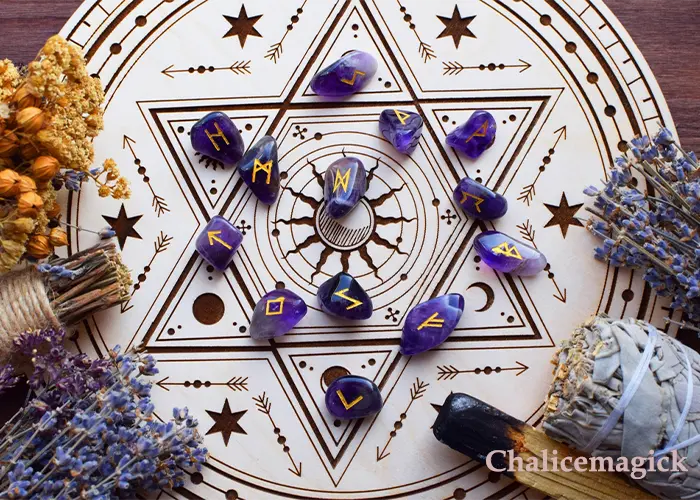
Each thelema symbol functions as a compressed idea, meant to provoke reflection rather than deliver answers. Symbols are tools, not decorations.
They encourage:
• Contemplation
• Self-inquiry
• Personal interpretation
Numbers and Meaning
Numerology plays a symbolic role, not as prediction, but as a way to connect ideas through shared structure. This symbolic language reinforces internal coherence rather than belief enforcement.
Truth 5: Is Thelema a Religion?
This question comes up often.
A Personal System, Not a Church
The thelema religion label is misleading if understood in a conventional sense. There is no universal worship style, no mandatory ritual life, and no enforced theology.
It functions more like a philosophical-spiritual operating system.
Individual Practice Varies
Some engage through meditation or ritual. Others through ethical reflection or creative work. Uniformity is not the goal.
Truth 6: The Law Itself — "Do What Thou Wilt"
The phrase most associated with Thelema comes from The Book of the Law: “Do what thou wilt shall be the whole of the Law.” Read carelessly, it sounds like permission for chaos. Read properly, it is the most demanding instruction in modern spirituality: discover your True Will, then live it completely. Few seekers realize the idea is older than Thelema itself — the word thelema is simply Greek for “will,” and as early as the 16th century, the writer Rabelais imagined an Abbey of Thélème whose only rule was “Do what thou wilt.” The philosophy sharpened what literature had already glimpsed: a life governed by will instead of drift.
Conclusion
Thelema does not promise comfort, certainty, or approval. What it offers instead is clarity—sometimes uncomfortable, often demanding, but deeply personal. Its relevance persists because the question it asks never expires: Are you living deliberately, or drifting by default?
About My Services
Thelema teaches that clarity begins when inner confusion is removed.
If you feel spiritually blocked, mentally conflicted, or weighed down by unseen energetic pressure, my personalized spiritual cleansing work helps restore focus, remove interference, and reconnect you with your natural path.
Clear spiritual obstacles and restore alignment with your true direction today.
FAQ
What is Thelema in simple terms?
It is a philosophy centered on discovering and living one’s deepest purpose without interfering with others.
For another system his influence inspired decades later, explore my guide on the hidden secrets of chaos magic.
Does it reject other religions?
No. It does not require abandonment of other beliefs, though it reframes authority as internal rather than external.
Is Thelema about ego or power?
Properly understood, it reduces ego by demanding honesty and self-discipline rather than indulgence.
Can anyone study Thelema?
Yes. Engagement is voluntary and self-directed, not restricted by background or identity.
For those comparing modern esoteric paths, my guide on the 7 truths about Kabbalah offers another perspective on inner transformation.